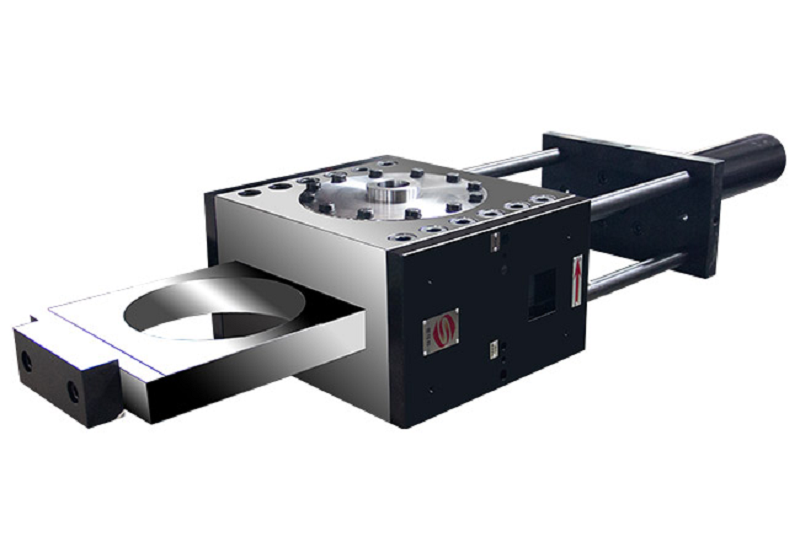
In the extrusion processing of plastics, rubber, and certain polymer materials, even after the raw material has been plastified by the screw, unmelted particles, impurities, aged materials, or gels may still be present in the melt. If these substances enter the die directly, they can easily affect the flow channel conditions and may cause problems such as spots, crystallization, surface irregularities, or localized blockages in the finished product. Single-plate screen changers are typically installed between the extruder’s discharge end and the die head, primarily for melt filtration and screen changing.
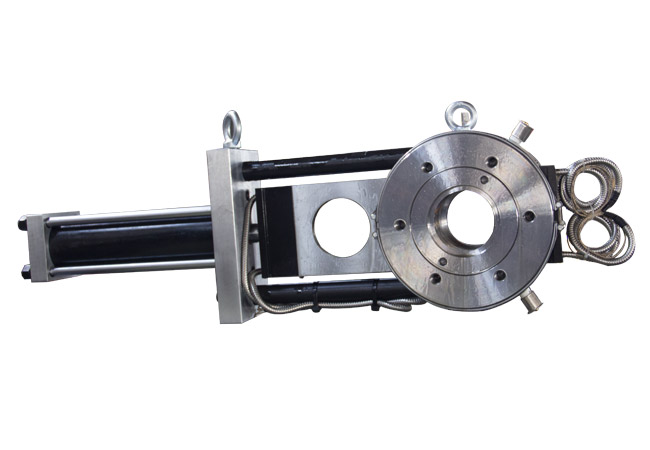
Basic Structure of a Single-Plate Screen Changer
A common single-plate, dual-station screen changer consists of a main body, a sliding plate, filter screens, a hydraulic drive unit, heating components, and a control system. The sliding plate features two filtration stations: one located within the melt channel for filtration, and the other positioned outside the unit as a standby.
Filtering Impurities from the Melt
Filtration is the primary function of a single-plate screen changer. Depending on the cleanliness of the raw materials, product requirements, and production capacity, screens with different mesh counts and configurations can be selected to trap solid impurities and inadequately plasticized particles in the melt.
Properly configuring the filter screens can reduce the entry of impurities into the die head and subsequent molding equipment, which helps improve the surface quality of the finished products and maintain unobstructed flow channels. It should be noted that the higher the mesh count of the filter screen, the greater the resistance typically encountered by the melt as it passes through; therefore, one should not simply pursue higher filtration precision.
Minimizing the Impact of Screen Changes on the Production Process
Manual screen changes usually require reducing the equipment speed or pausing the extrusion process. The single-plate screen changer is hydraulically driven; provided that equipment configuration and process conditions permit, it can switch filter stations while the production line is running, thereby reducing downtime associated with screen changes.
Whether significant pressure changes occur during screen changes depends on material viscosity, filter area, slide plate movement speed, and the configuration of upstream and downstream equipment. For production lines with high requirements for output quality—such as those producing film and sheet—pressure and flow rate can be adjusted in conjunction with a melt pump based on actual conditions.
Compatible with a Wide Range of Extrusion Production Lines
The single-plate screen changer features a relatively compact design and a short melt flow path, making it suitable for production lines producing sheets, plates, pipes, profiles, blown film, cast film, wire and cable jackets, and plastic pellets.
In virgin material extrusion, the screen changer is primarily used to filter out small amounts of impurities in the raw material, thereby minimizing their impact on the die and the appearance of the finished product. In recycled plastic pelletizing, where raw material compositions are more complex, the filter screen is more prone to impurity buildup; therefore, the appropriate filter area must be selected based on screen-changing frequency and production capacity.
For certain rubber, thermoplastic elastomer, and synthetic fiber melts, the unit can also be configured with a structure tailored to the material’s viscosity, processing temperature, and pressure conditions. Since different materials vary in flow characteristics and temperature sensitivity, the equipment materials, heating methods, and sealing structures must be determined on a case-by-case basis.
Convenient Equipment Retrofit and Installation
The single-plate screen changer features an integrated design that occupies relatively little space and can be interfaced with extruders of various specifications. When adding melt filtration equipment to an existing production line, connection flanges and support structures can be designed based on the extruder’s discharge port, die inlet, and available space on-site.
During installation, factors such as equipment weight, melt flow direction, hydraulic station location, heating wiring, and operating space must also be considered to avoid selecting the screen changer specification based solely on the extruder model.
Selection Parameters for Single-Plate Screen Changers
Before selecting a single-plate screen changer, the material name, production capacity, processing temperature, melt viscosity, inlet pressure, outlet pressure, allowable pressure differential, filtration precision, and interface dimensions must be clearly defined. If recycled material is used, the impurity content of the raw material and the expected screen-changing frequency should also be determined.
If the filtration area is too small, pressure upstream of the screen may rise rapidly; if the flow channel dimensions are too large, material residence time may increase. Therefore, equipment specifications should be calculated based on actual process parameters and should not be selected solely based on screw diameter.
For production lines with high output, high impurity content, or where significant pressure fluctuations are not permitted, compare different configurations—such as single-plate, double-plate, double-column, and self-cleaning screen changers—before determining the appropriate filtration solution.
Key Inspection Points During Operation
Before the equipment is put into operation, it should be preheated in accordance with process requirements; material should not be fed until the main body has reached a uniform temperature. During production, monitor the pressure before the screen, the pressure after the screen, the heating temperature, and the status of the hydraulic system, and schedule screen changes based on changes in pressure differential.
When replacing the filter screen, operators should wear appropriate high-temperature protective gear, avoid disassembling the screen under pressure, and refrain from forcing the slide plate when the temperature is insufficient. Regular cleaning of the slide plate surface and sealing areas helps maintain the equipment’s normal switching function.
Tianjin Ruicheng Pump Industry can assist in determining the filtration area, flow channel specifications, heating method, and hydraulic configuration of a single-plate screen changer based on the material properties, production capacity, and on-site interface information provided by the customer, ensuring the equipment integrates seamlessly with the existing extrusion production line.