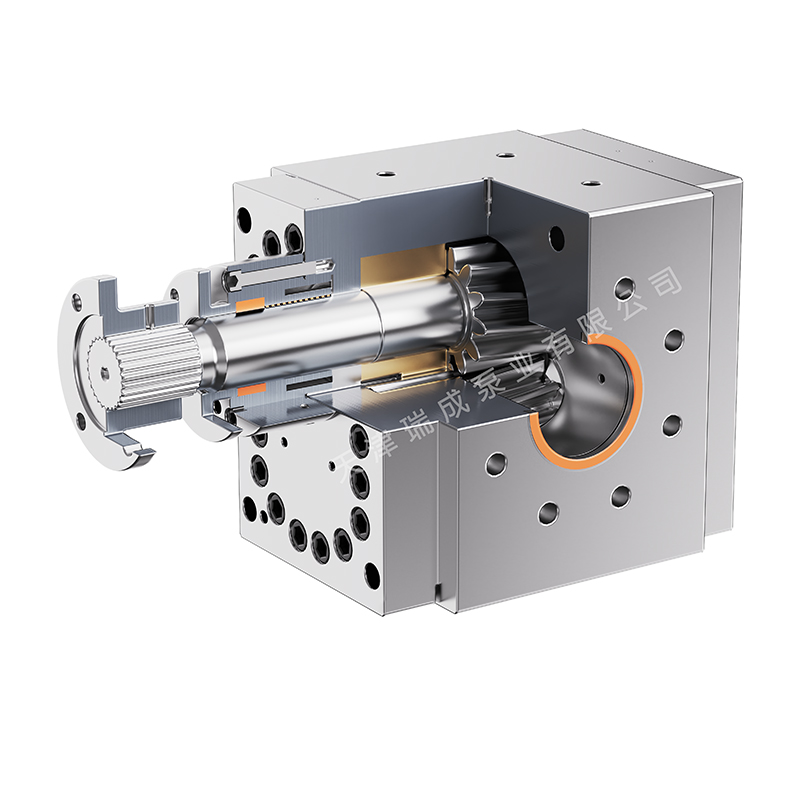
In the production of plastic strapping bands such as PET and PP, the stability of the extrusion system affects the band’s thickness, width, surface condition, and subsequent stretching results. Changes in screw speed, material condition, filtration resistance, or die pressure can all cause fluctuations in melt flow rate. When material feed fluctuates, it can easily lead to dimensional deviations, uneven stretching, band breakage, or irregular winding, which in turn increases raw material waste and the frequency of machine adjustments.
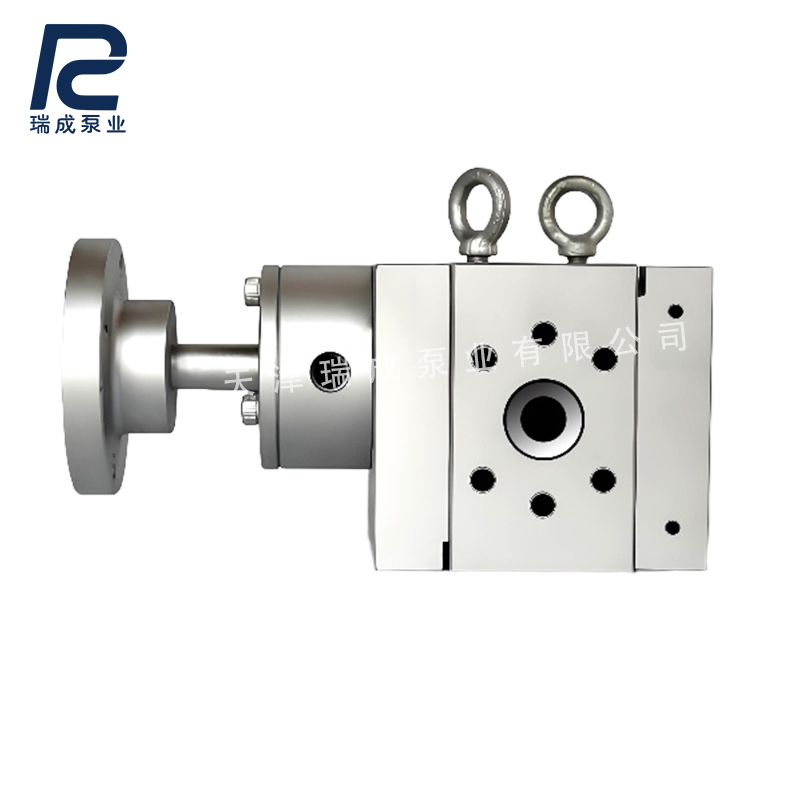
A melt pump is typically installed between the extruder and the die head, utilizing gear meshing to provide relatively stable volumetric delivery. Rather than simply increasing pressure, it moderately offloads the pressure-building task from the screw, allowing the screw to focus more on plasticization and mixing, while the melt pump is responsible for maintaining stable pressure, flow, and metering.
I. Improving Strap Dimensional Consistency
Packaging straps have high requirements for consistency in thickness and width. By delivering a relatively stable melt output based on rotational speed, the melt pump mitigates the impact of screw fluctuations on the die end. A more uniform melt entering the die helps reduce dimensional variations in both the transverse and longitudinal directions of the strap, providing a more stable process foundation for cooling, stretching, embossing, and winding.
More uniform strap dimensions also help maintain stable parameters during subsequent drawing and winding, reducing stretching discrepancies caused by localized areas that are too thick or too thin. For continuously operating strapping production lines, a stable feed is a critical factor in improving the consistency of the finished product.
II. Reducing Material Waste During Machine Adjustments
When production line pressure fluctuates repeatedly, operators often need to adjust the screw speed, draw speed, or die parameters. Non-conforming straps produced during commissioning typically require recycling and processing, which not only increases the operator’s workload but also results in additional raw material and energy consumption.
With a properly configured melt pump, system pressure and flow rate are more easily maintained within the set range, reducing the need for repeated trial runs and parameter adjustments and ensuring more efficient use of raw materials. At the same time, stable melt output minimizes the need for prolonged adjustments after startup, allowing the production line to reach a relatively stable operating state more quickly.
III. Reducing the Pressure-Building Burden on the Extruder
When resistance in the die or filtration section is high, relying solely on the screw to build pressure may require increasing the rotational speed or placing additional load on the equipment. By having the melt pump assume part of the pressure-building task, the screw can operate under more stable conditions, helping to reduce unnecessary shear and fluctuations in temperature rise.
For materials such as PET that are sensitive to temperature and residence time, this division of process tasks helps stabilize the melt state and reduces performance fluctuations caused by localized temperature changes. At the same time, the rational distribution of the extruder’s operational load helps reduce maintenance pressures caused by long-term high-load operation of the equipment.
IV. Providing Controllable Conditions for Output Adjustments
There is a clear correlation between the melt pump’s output and its rotational speed. When producing strapping with different widths, thicknesses, or specifications, parameters such as pump speed, die, and take-up can be matched to provide a more reliable basis for output adjustments.
A stable feed also helps reduce brief production stoppages caused by strap breaks or specification deviations, maintaining a continuous production rhythm. When adjusting order specifications, companies can use the control system to match pump speeds, thereby reducing errors caused by relying solely on manual experience.
Whether a melt pump can perform its intended function depends on the material type, viscosity, temperature, flow rate, inlet and outlet pressures, displacement, and filtration configuration. When selecting a model, it is essential to evaluate the operating conditions of the entire production line and consider the pump body material, seal design, heating method, and drive control.
Tianjin Ruicheng Pump Industry can provide melt pump selection and configuration recommendations based on strapping material specifications, production capacity requirements, and equipment connection conditions, helping production lines achieve a more appropriate balance between stable operation, material control, output adjustment, and maintenance management.