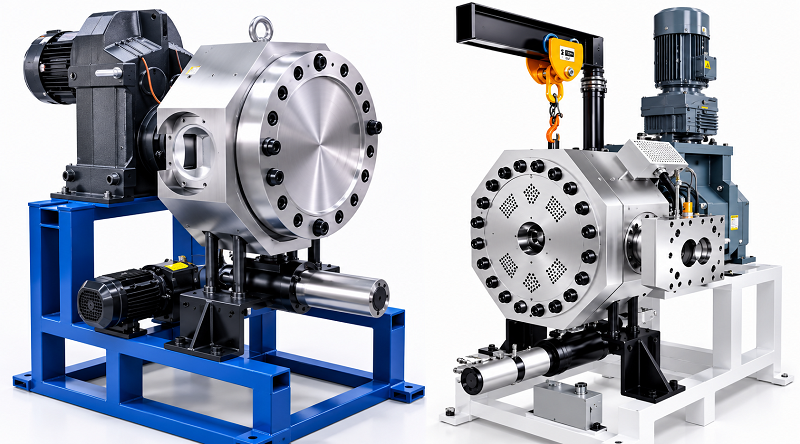
In plastic filament production, after the raw material is plastified by an extruder, it must pass through a die head to form a film or sheet, and then undergo cooling, slitting, stretching, and winding to produce plastic flat filaments. The cleanliness of the melt and the stability of the pressure affect the thickness, width, stretching condition, and subsequent processing results of the flat filaments. An automatic screen changer is installed between the extruder and the die head. It primarily handles melt filtration and screen changing, and is a commonly used piece of equipment in filament extrusion production lines.
I. Filtering Impurities from the Melt
The raw materials used in filament production may contain partially unmelted particles, carbonized residues, metal debris, or other impurities. In particular, when using recycled PP, PE, or filled and modified materials, the cleanliness of the raw materials is prone to variation.
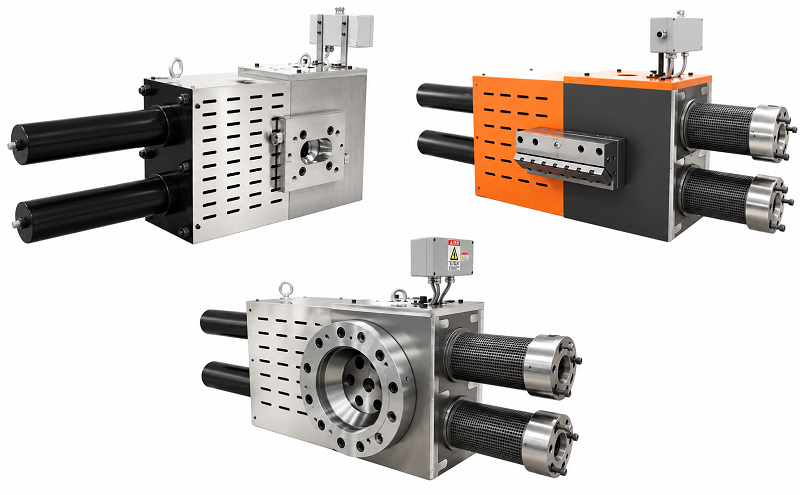
An automatic screen changer is equipped with a filter screen inside; as the melt passes through the screen, larger impurities are intercepted, and the filtered material then enters the die head. This reduces the entry of impurities into the die orifice, minimizes die clogging, material buildup, and uneven output, and provides a more uniform melt for subsequent drawing processes.
II. Minimizing the Impact of Screen Changes on Production
As production time increases, impurities accumulate on the filter screen, gradually increasing the resistance to melt flow. Traditional manual screen changes typically require reducing the extrusion speed and, at times, pausing equipment operation, followed by readjustment of temperature, pressure, and traction parameters after the screen change.
Automatic screen changers can perform screen changes based on preset time, melt pressure, or the pressure differential across the filter screen. When the active screen becomes clogged, the hydraulic system pushes a new filtering area into the melt channel, thereby reducing the need for manual intervention and minimizing the impact of frequent shutdowns on continuous production.
III. Minimizing Extrusion Pressure Fluctuations
Screen clogging causes an increase in extruder outlet pressure, while pressure drops may occur during screen changes. Significant pressure fluctuations can lead to variations in die output, potentially resulting in uneven thickness, width deviations, or unstable drawing of the flat filaments.
A continuous automatic screen changer preserves a portion of the melt passage during screen switching, allowing material to flow continuously and minimizing pressure fluctuations during the process. If the filament production line is also equipped with a melt pump, it can further assist the extruder in building pressure, resulting in a more stable melt flow into the die.
IV. Helping Maintain Consistent Filament Specifications
Plastic flat filaments have specific requirements for thickness and width. If the melt contains excessive impurities or if filtration resistance fluctuates frequently, the extrusion conditions in different areas of the die may vary, thereby affecting the filament specifications.
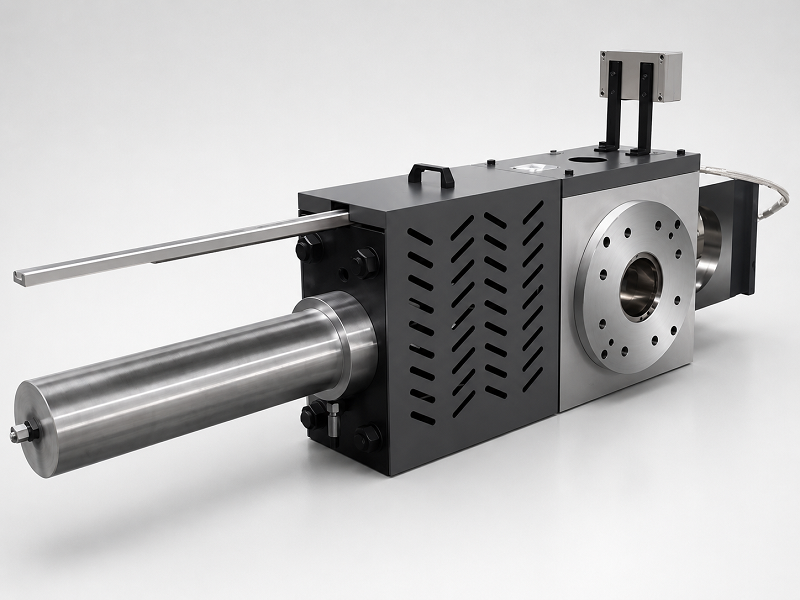
By providing continuous filtration and timely filter screen replacement, the automatic screen changer minimizes disruptions to the extrusion profile caused by impurities and filter clogging. When the melt enters the die in a more uniform state, it helps maintain consistency in the flat filament’s thickness, width, and stretching results, while also reducing issues such as filament breakage, fuzziness, and surface particles.
V. Facilitating Production Management and Equipment Maintenance
Automatic screen changers are typically used in conjunction with pressure sensors, hydraulic stations, and control systems. Operators can assess screen condition based on pressure changes and set screen-changing criteria according to raw material types and production cycles.
This operating mode facilitates the recording of screen-changing frequency and filtration status, providing reference data for raw material adjustments, process optimization, and equipment maintenance. Additionally, by promptly intercepting impurities, it reduces the entry of foreign matter into the die and downstream equipment, thereby contributing to the stable operation of the production line.
In filament extrusion production, the automatic screen changer is not the sole factor determining product quality; its effectiveness also depends on the raw material formulation, filtration precision, extrusion output, melt temperature, and die head structure. Tianjin Ruicheng Pump Industry can provide appropriate automatic screen changer selection solutions for filament extrusion production lines based on material type, production capacity, operating pressure, and installation space.