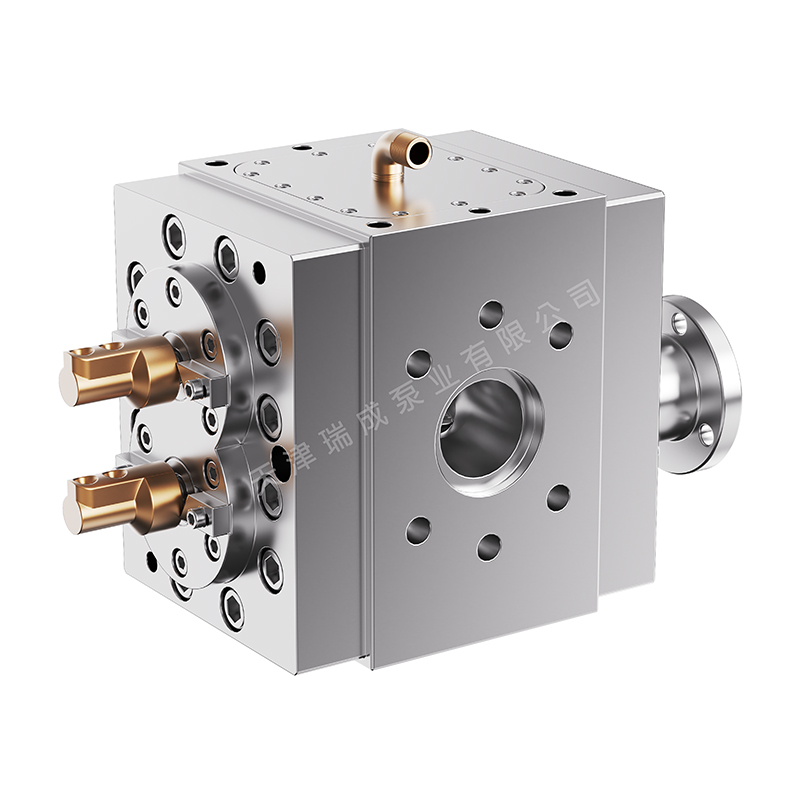
In rubber extrusion, calendering, and continuous molding processes, the rubber compound typically exhibits characteristics such as high viscosity, strong elasticity, and high flow resistance. When relying solely on the extruder screw for conveyance, changes in rotational speed, feed conditions, temperature, and die resistance can all cause fluctuations in outlet pressure and flow rate. Rubber melt pumps are generally installed between the extruder and the die to provide continuous conveyance, pressure boosting and stabilization, and metered output, thereby ensuring relatively stable process conditions for subsequent molding operations.
I. Suitable for High-Pressure Conveyance Conditions
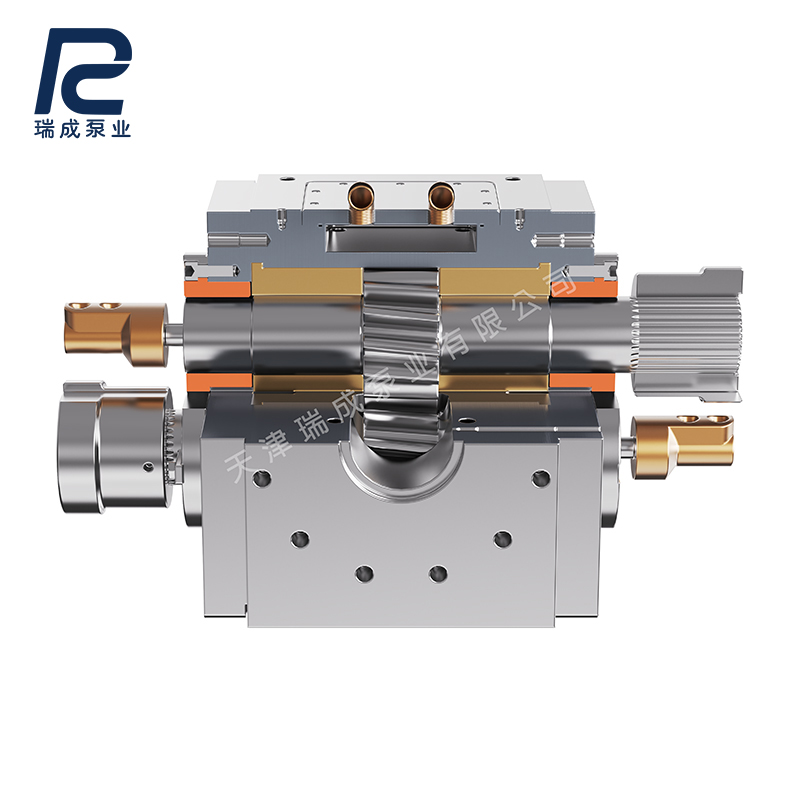
Before the rubber compound enters the die, it must overcome resistance generated by filtration devices, connecting piping, and the die’s flow channels. Rubber melt pumps employ a positive-displacement gear mechanism, using a pair of continuously meshing gears to convey the material from the inlet to the outlet.
The pump housing, gears, bearings, and end plates must possess the appropriate pressure-bearing capacity and be matched according to the outlet pressure, operating pressure differential, and drive torque. When properly configured, the melt pump can handle part of the pressure-building task on the production line, reducing the pressure-building burden on the extruder screw and allowing the screw to focus more on the plasticization and mixing of the rubber compound.
II. Suitable for High-Viscosity Rubber Compounds
Natural rubber, synthetic rubber, silicone rubber, and certain thermoplastic elastomers have low flowability during processing, placing high demands on the pump’s flow channels, gear clearances, and drive system.
Rubber melt pumps typically feature smooth material passages to minimize residence time and accumulation of the compound within the pump chamber. For compounds containing carbon black, fillers, or other additives, the materials for the gears, bushings, and pump body should be selected based on the compound’s abrasiveness, and the operating speed should be appropriately controlled to avoid significant temperature fluctuations caused by shear and friction.
III. Pressure Mitigation and Flow Stability
The discharge conditions of an extruder are easily affected by screw rotation, feed uniformity, and temperature fluctuations. A melt pump can discharge a relatively fixed volume of material per revolution. When the inlet feed is relatively stable, there is a clear correlation between the output flow rate and the pump’s rotational speed.
In conjunction with variable-frequency drives and pressure feedback control, the pump speed can be adjusted according to production conditions to reduce pressure and flow fluctuations upstream of the die. For rubber hoses, sealing strips, rubber sheets, and other continuously extruded products, a stable material supply helps control the product’s cross-sectional dimensions, weight per unit length, and surface finish.
IV. Continuous Metering Capability
Rubber melt pumps not only handle material conveyance but can also serve as a continuous metering component in the production line. Once the operating speed is set based on the target output, the equipment can deliver the rubber compound at a relatively stable rate, facilitating process adjustments by production personnel.
It should be noted that actual metering performance is influenced by factors such as material viscosity, inlet pressure, gear clearance, component wear, and control methods. Therefore, equipment selection should not rely solely on theoretical displacement; calculations must also account for actual operating conditions, and operational testing should be conducted to verify the suitability of the configuration.
V. Balancing Temperature Control and Sealing
Rubber materials are relatively sensitive to temperature. Low temperatures increase conveying resistance, while high temperatures may alter the state of the rubber compound, affecting subsequent processing. Rubber melt pumps can be equipped with cooling systems according to process requirements to ensure the pump body temperature remains in harmony with the production line’s operating conditions.
Shaft end seals must also be selected based on material characteristics, pressure, and temperature to minimize rubber compound leakage, while also considering equipment cleaning, disassembly, and routine maintenance.
Selecting a rubber melt pump requires comprehensive consideration of the rubber compound type, viscosity, temperature, output, inlet pressure, outlet pressure, operating pressure differential, filler ratio, and connection method. Tianjin Ruicheng Pump Industry can match the pump body structure, displacement, drive system, and temperature control method based on production line parameters, providing corresponding conveying configuration recommendations for rubber extrusion equipment.