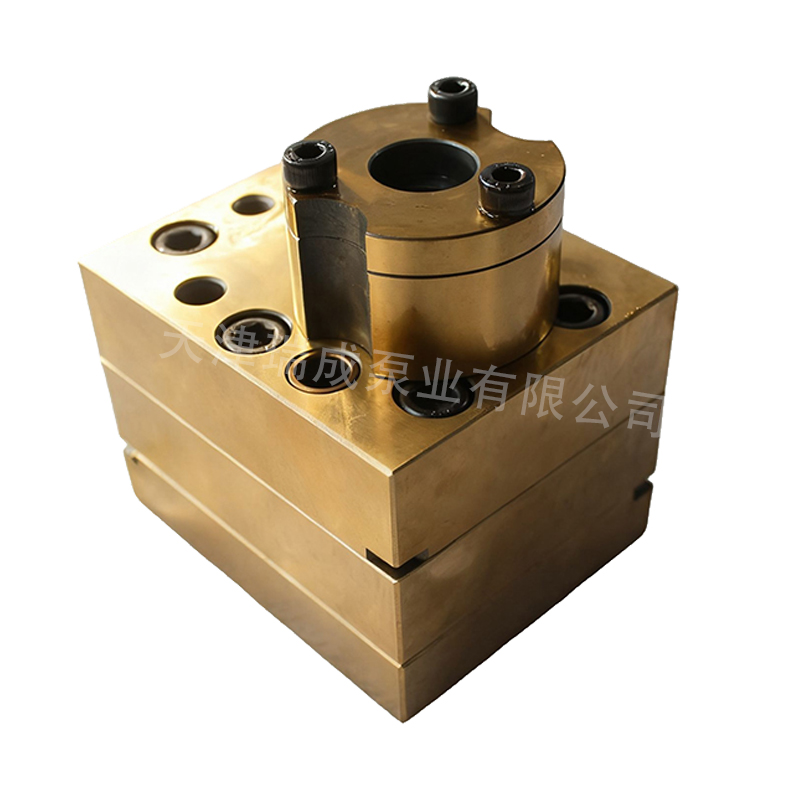
In the continuous production of chemical fibers and polymer materials, the melt or spinning solution must maintain a stable, continuous, and precise flow rate before entering the spinneret assembly. Fluctuations in feed rate often directly affect filament uniformity, forming stability, and the operational quality of subsequent drawing and winding processes. Spinning metering pumps serve as critical equipment in this key stage, responsible for metered delivery and pressure stabilization, and are widely used across various production lines for chemical fibers and functional materials.
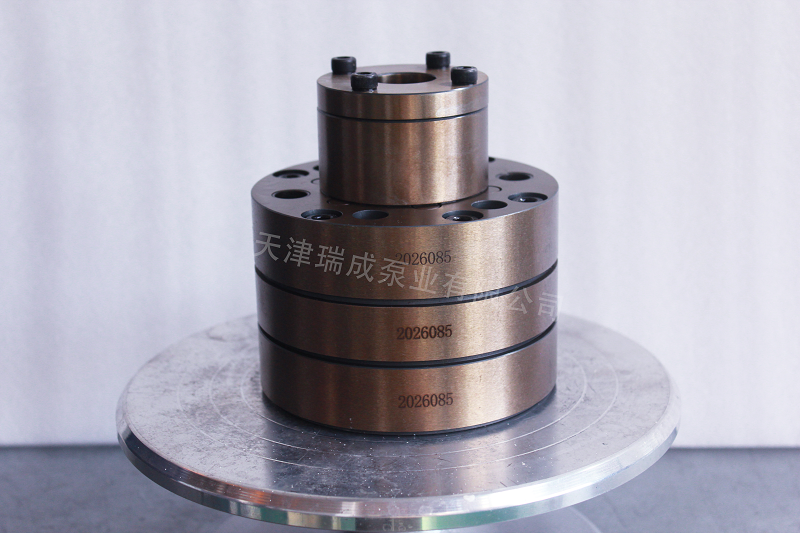
From a structural perspective, spinning pumps typically employ a high-precision gear metering mechanism. By meshing gears to form a stable volumetric chamber, they enable the continuous delivery of high-temperature melt or spinning solution. Their output flow rate maintains a stable relationship with rotational speed, thereby ensuring consistent pressure and flow at the spinneret inlet even when fluctuations occur in the extrusion system. This characteristic makes them a critical steady-state control unit in synthetic fiber spinning systems.
In practical applications, spinning pumps are primarily used in polyester filament production lines. In these processes, the melt must form initial filaments through the spinneret at high temperatures, making the process extremely sensitive to flow fluctuations. The stable metering capability of spinning pumps helps improve yarn uniformity and spinnability while reducing filament breaks and fluctuations.
Second, nylon and polypropylene filament production lines are also important application areas for spinning pumps. Since materials such as PA6, PA66, and PP exhibit significant viscosity changes in their molten state and require high delivery stability, spinning pumps can maintain a continuous and stable feed within a certain operating range, thereby improving overall process consistency and production continuity.
In the field of staple fiber production—such as polyester and acrylic staple fiber production lines—spinning pumps are primarily used to ensure the consistency of single-fiber linear density. Through stable metering output, the cut fibers exhibit greater uniformity during subsequent opening, drawing, and spinning processes, which helps improve the quality of the final textile products.
Furthermore, spinning pumps play a crucial role in production lines for functional and engineering fibers. For example, production lines for high-strength industrial yarns, flame-retardant fibers, and modified polymer fibers demand even higher levels of process stability and structural consistency. Spinning pumps can effectively mitigate the impact of fluctuations in upstream extrusion, ensuring that high-value-added products deliver more stable and reliable performance.
In multicomponent and composite spinning processes—such as bicomponent skin-core fibers, parallel fibers, and blended modification systems—spinning pumps also perform ratio control and synchronized metering functions. Through the coordinated operation of multiple pumps, precise blending ratios of different components can be achieved, thereby ensuring the stable formation of fiber structures.
At the same time, in recycled chemical fiber production lines—such as those for recycled PET or recycled PP fibers—where raw material sources are complex and melt fluctuations are significant, the pressure stabilization and metering functions of spinning pumps become even more critical, helping to improve overall process controllability and product consistency.
Overall, spinning pumps are suitable for all chemical fiber production lines that require “continuous, stable, and precise metering” of melt or spinning solution, serving as a vital core piece of equipment connecting the extrusion system to the spinneret forming system. As the chemical fiber industry continues to evolve toward higher quality and greater stability, the application of spinning pumps in the fields of filament, staple fiber, functional fibers, and composite materials will continue to expand, playing an increasingly critical role in supporting the manufacturing process.