In the continuous production of polymer materials, when the melt flows from front-end equipment into downstream pipelines, filters, or molding systems, the stability of the conveying pressure and temperature directly affects the operational status of the entire production line. For polymer melts with medium to high viscosity, if the pipeline is long, material temperature fluctuates significantly, or downstream equipment requires high stability in feed pressure, relying solely on the conveying capacity of front-end equipment often fails to meet the demands of continuous production. Therefore, melt pipeline booster pumps are widely used on relevant production lines for pipeline pressurization, stable-pressure conveyance, and process integration.
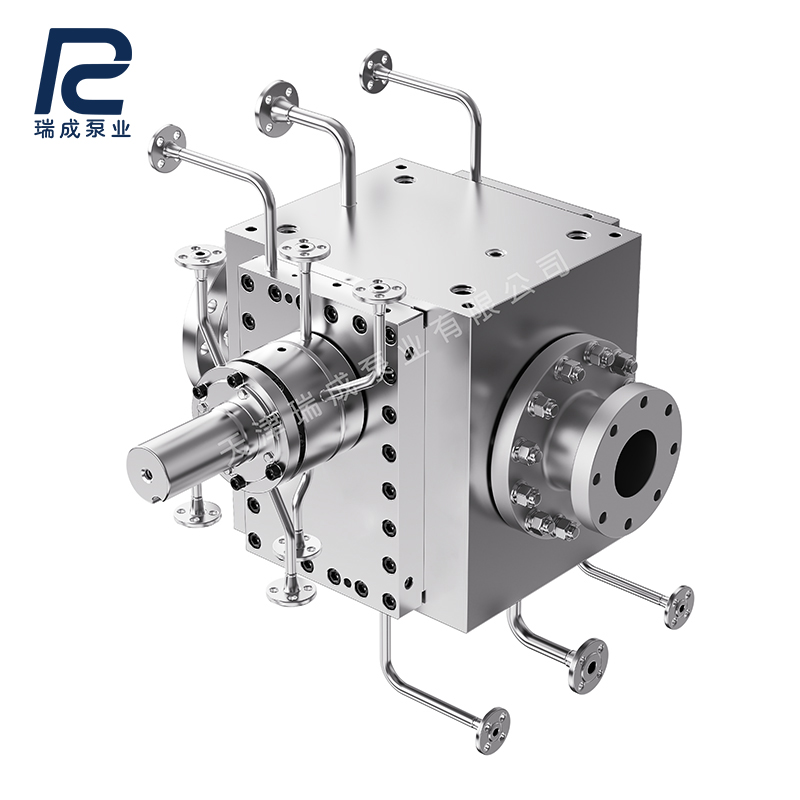
So, do melt pipeline booster pumps necessarily require thermal oil heating? From a practical perspective, thermal oil heating is not mandatory for all operating conditions; rather, a comprehensive assessment must be made based on material properties, operating temperature, equipment specifications, pipeline layout, and on-site heat source conditions. For production lines with high temperature requirements, high viscosity materials, large pump sizes, or extended continuous operation times, thermal oil heating is typically a common configuration. Its primary function is to help maintain a relatively uniform temperature within the pump body, reducing changes in melt viscosity caused by local temperature differences and thereby enhancing the stability of the conveying process.
During operation of a melt pipeline booster pump, the material enters the pump chamber and is continuously driven toward the outlet as the gears rotate. If the pump body temperature is insufficient, melt viscosity may increase, potentially leading to increased startup load, higher flow resistance, and more severe pressure fluctuations. For certain heat-sensitive materials, excessively high temperatures or localized overheating may also affect the material’s state. Therefore, a reasonable heating and insulation design is not merely for raising the temperature; more importantly, it ensures that the pump body temperature remains consistent with the process temperatures of the upstream and downstream pipelines, reactors, or extrusion systems.
A key feature of thermal oil heating is its relatively uniform heat transfer, making it suitable for certain high-temperature, continuous-operation, and large-scale equipment applications. By circulating thermal oil through a jacket or heating channel, the pump body can be heated more evenly, reducing local temperature variations. For melt conveyance applications involving materials such as PET, PA, PBT, PP, PE, and ABS, if the production line is equipped with a thermal oil system, using thermal oil heating for the pipeline booster pump facilitates unified management with the line’s overall temperature control system.
However, in cases involving small flow rates, limited local installation space, or the absence of a thermal oil system on-site, alternatives such as electric heating can be selected based on operating conditions. Electric heating features a relatively simple structure and is convenient to install and control, making it suitable for certain extrusion, pelletizing, and pilot line applications. It is important to note that regardless of whether thermal oil heating or electric heating is used, the system must be matched to the material processing temperature, pump body structure, and on-site process conditions to avoid issues such as insufficient heating, uneven temperature maintenance, or temperature control lag.
When selecting melt pipeline booster pumps, Tianjin Ruicheng Pump Industry typically makes a comprehensive assessment based on the customer’s material type, viscosity range, operating temperature, inlet pressure, outlet pressure, flow rate requirements, pipeline connection methods, and on-site heating conditions. For applications such as long-distance melt conveyance, pressure boosting in polymer pipelines, and chemical fiber melt conveyance, a thermal oil heating system can be configured based on on-site conditions; for certain extrusion production lines, an electric heating solution may also be selected depending on equipment space and control methods.
Overall, whether a melt pipeline booster pump requires thermal oil heating cannot be simply summarized as “yes” or “no.” It depends on whether the material requires stable temperature maintenance, the pump’s size and specifications, whether the production line is equipped with a thermal oil system, and the customer’s requirements for temperature stability and continuous production. Selecting the appropriate heating method helps improve melt flow conditions, reduces the impact of pressure fluctuations on downstream processes, and supports the stable operation of the production line.