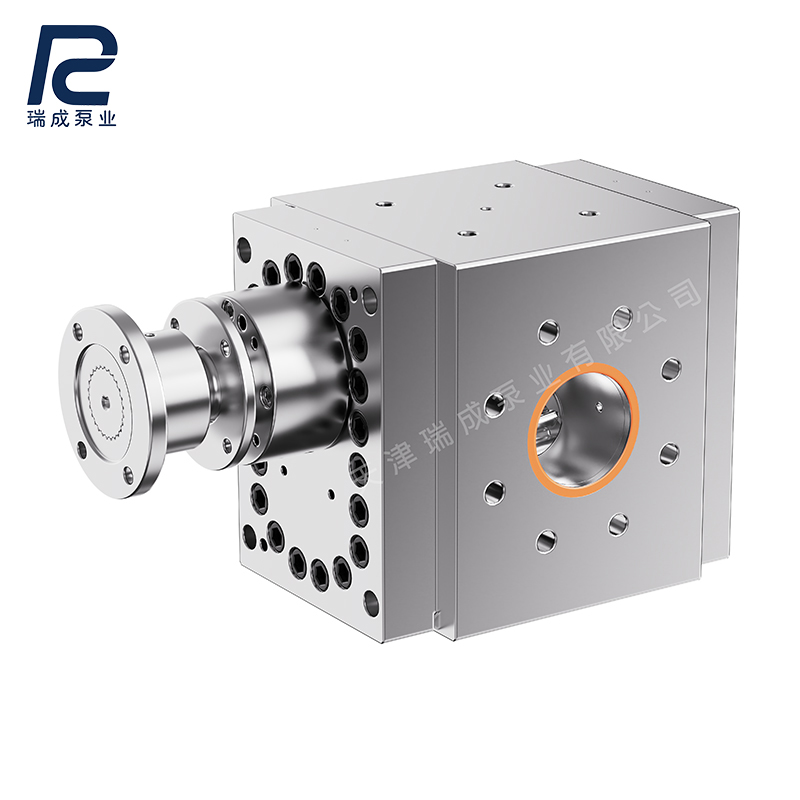
During the extrusion process, after the material is heated and plastified by the extruder, it must enter the die, filter, or subsequent forming equipment at a relatively stable pressure and flow rate. For production lines involved in sheet, plate, film, pipe, pelletizing, petroleum, and polymer material processing, the state of melt delivery affects product thickness, dimensional stability, particle uniformity, and production continuity. Therefore, in certain extrusion production lines with high requirements for pressure and flow stability, a dedicated extruder melt pump is installed between the extruder and the die to improve feed stability downstream.
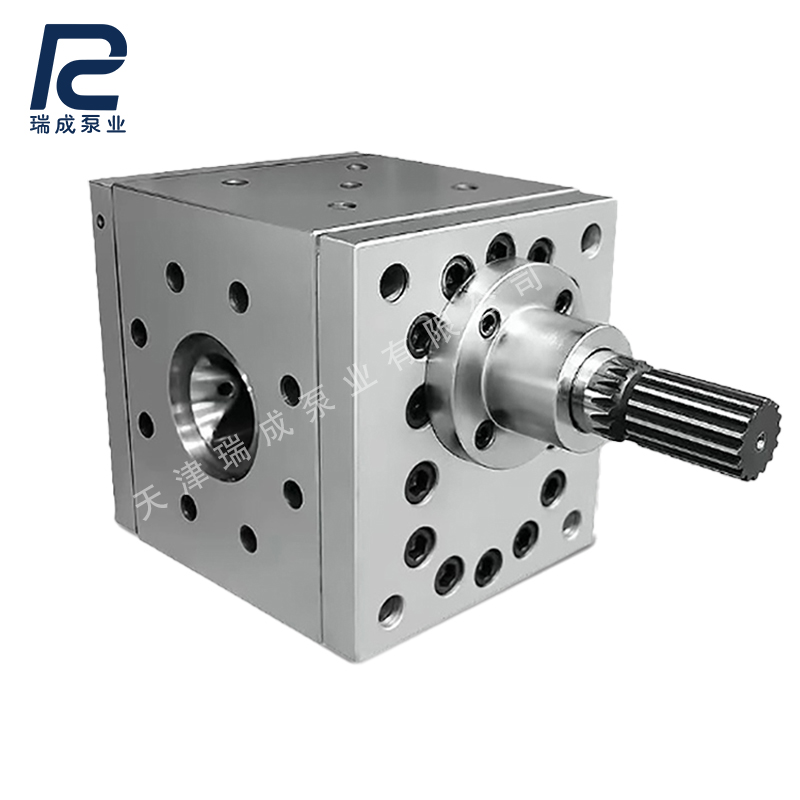
Dedicated extruder melt pumps typically belong to the category of positive displacement gear pumps. During operation, molten material enters the gear chamber through the pump inlet. As the drive gear and driven gear continuously mesh, the material is conveyed toward the outlet and delivered to subsequent process stages. Compared to relying solely on the screw to generate pressure, melt pumps can mitigate the impact of screw speed fluctuations, changes in material viscosity, and variations in filter system resistance on downstream pressure and flow rate, resulting in a smoother melt delivery process.
In practical applications, melt pumps primarily serve to stabilize pressure, boost pressure, and ensure metered delivery. When the plasticizing capacity at the front end of the extruder meets production requirements, but the die resistance at the rear end is high, pressure differentials in the filtration system fluctuate significantly, or the finished product demands high flow stability, the melt pump can act as an intermediate conveying unit to help the production line achieve a more stable output state. For products such as films, sheets, and precision tubes that require high consistency in thickness and dimensions, stable material supply helps mitigate quality fluctuations caused by pressure variations.
When selecting a melt pump, one must not rely solely on displacement; instead, a comprehensive assessment must be made considering factors such as the extruder screw diameter, speed range, actual output, material type, melt viscosity, processing temperature, inlet pressure, outlet pressure, and installation space. If the pump is undersized, it may limit the overall line output; if the displacement is too large, issues such as insufficient inlet feed, unstable suction, or pressure fluctuations may arise. Therefore, when configuring a dedicated melt pump for an extruder, it is essential to match the pump appropriately to the actual operating conditions of the production line, rather than simply pursuing larger specifications.
Tianjin Ruicheng Pump Industry Co., Ltd. can provide melt pump products suitable for various materials and operating conditions based on the actual process requirements of the extrusion production line. Our products are suitable for processing a wide range of polymer materials, including PP, PE, PET, PA, ABS, TPU, EVA, TPE, TPV, PLA, and PBAT. We can also customize interface configurations, heating methods, sealing structures, and installation methods to meet on-site requirements.
For extrusion production lines, melt pumps are one of the critical pieces of equipment connecting the plasticization and conveying stages with the downstream molding process. Properly configuring melt pumps helps mitigate pressure fluctuations, improve feed continuity, and provide more stable melt delivery conditions for subsequent filtration, metering, and molding processes. Tianjin Ruicheng Pump Industry Co., Ltd. will assist users in product selection and solution matching by considering material properties, production requirements, and on-site conditions, thereby providing reliable conveying solutions for plastic extrusion production.