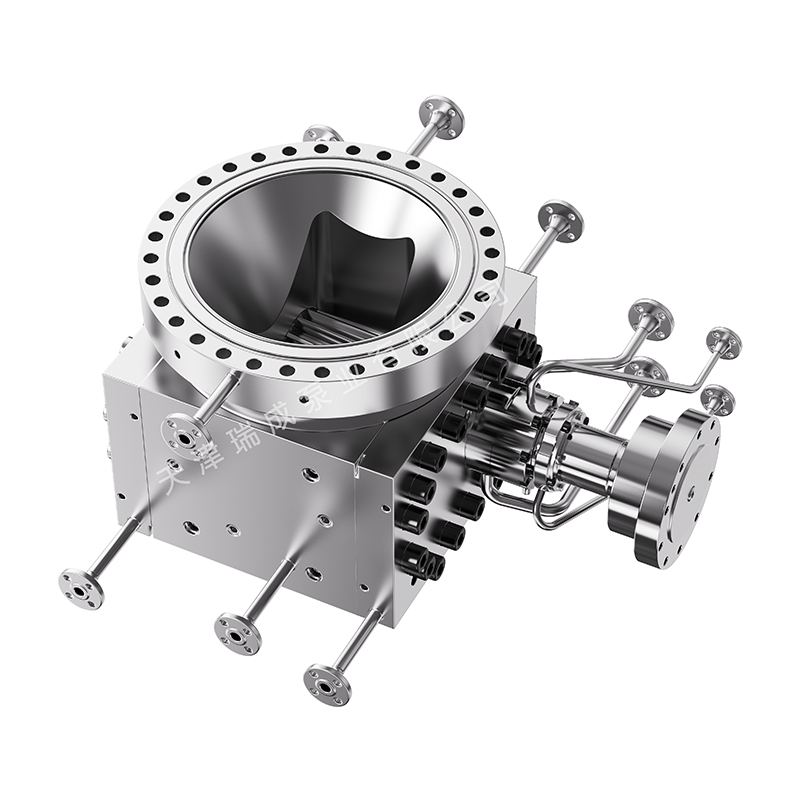
Reactor bottom pumps are positive-displacement, forced-conveyance devices specifically designed for high-temperature, high-viscosity and vacuum operating conditions, and are responsible for the discharge, metering and pressurised conveyance of materials from polymerisation reactors.
I. Operating Principle and Structural Features
A pair of precision-meshed gears facilitates the suction, conveyance and discharge of the melt. A negative pressure is created on the inlet side to draw in the melt, which is then pressurised and extruded as the gears rotate to the discharge side. The output flow rate is directly proportional to the rotational speed, enabling precise metering via variable-frequency speed control.
Structurally, the pump features a large-flanged inlet to ensure the smooth suction of high-viscosity media under vacuum conditions; the pump body and gears are manufactured from high-temperature-resistant alloys; mechanical seals or composite seals are employed to minimise the risk of leakage; and a heating system is fitted to maintain stable melt viscosity.
II. Key Technical Advantages
Capable of conveying high-temperature and high-viscosity materials. Suitable for polymer melts across a wide viscosity range and at high temperatures, covering everything from low-viscosity solutions to high-viscosity melts of tens of thousands of centipoise.
Suitable for vacuum conditions. The large inlet flange and precision clearance design enable the pump body to draw in material stably under high vacuum or negative pressure conditions, reducing the risk of oxidation caused by air ingress, and making it suitable for reaction processes such as devolatilisation and polycondensation.
Precise flow rate and stable output. The positive displacement principle, combined with precision-machined gears, results in minimal pressure and flow pulsations during operation, providing a continuous and stable supply of material to downstream processes and reducing product inconsistencies or filament breakage caused by flow fluctuations.
III. Industry Applications
Chemical fibre industry. In the discharge stages of prepolymerisation and final polymerisation reactors for polymers such as PET, PA, PBT and PP, this pump handles melt conveyance and metering, supplying melt with stable pressure and uniform flow rate for subsequent spinning processes, thereby ensuring consistent spinning quality.
Resin and plastics industry. During discharge from polymerisation reactors for resins such as PS, ABS, PC and PMMA, as well as in the production of hot-melt adhesives, epoxy resins and phenolic resins, the discharge pump reliably conveys the fully reacted melt to pelletising, slicing or downstream moulding equipment.
Biodegradable materials sector. Biodegradable polymers such as PLA, PBAT and PGA are sensitive to shear and temperature; the smooth conveyance provided by discharge pumps helps minimise thermal and shear degradation during material transfer, ensuring stable material performance.
General chemical industry. These pumps can also be used to convey various intermediate products, including raw solutions, solutions, colloids and oligomers, providing a continuous, high-flow supply of material to equipment such as de-gassers and coolers.
IV. Selection Recommendations
When selecting a pump, it is recommended to comprehensively consider parameters such as the viscosity of the medium, operating temperature, inlet vacuum, outlet pressure, flow rate range and the corrosiveness of the material. Different operating conditions impose varying requirements on the pump body material, seal type and heating method; appropriate selection helps to extend the service life of the equipment and ensure the stable operation of the production line. Tianjin Ruicheng Pump Industry can provide selection solutions and technical support based on the user’s process conditions.