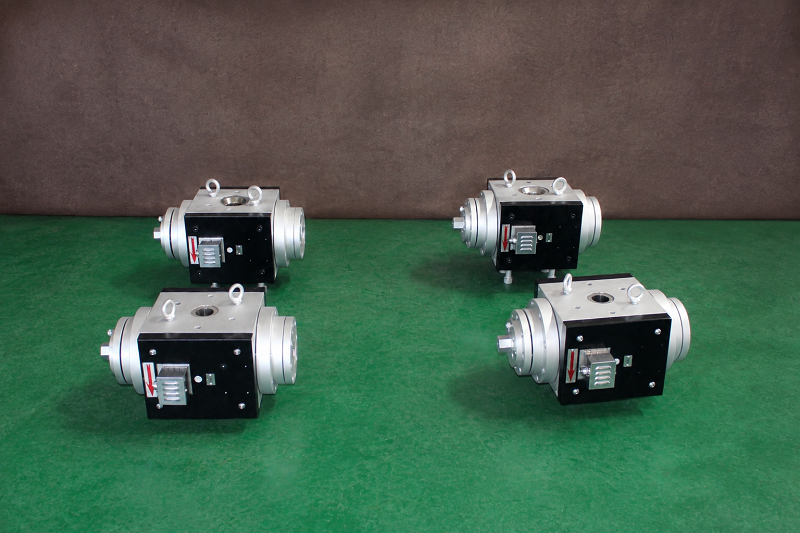
During plastic extrusion, modified pelletization, and polymer processing, when the equipment is first started up, the temperatures of the barrel, filter assembly, and die are still in the adjustment phase. The upstream melt may contain cold material, residual material, or material that has not been fully plastified. If this material enters the die or pelletizing system directly, it can easily cause uneven output and increase the amount of cleanup work required afterward.
Discharging Unstable Material During the Start-up Phase
Once the production line has warmed up, first switch the start-up valve to the discharge position to expel the unstable molten material present at startup. Operators can observe the melt’s color and plasticization state and assess operating conditions by monitoring changes in temperature, pressure, and current. Once the material state stabilizes, switch to the production channel to feed the melt into the die, pelletizing die, or other downstream equipment, thereby reducing the entry of cold material, charred material, and old material into the molding process.
Supporting Material Changes and Color Switches
When changing raw materials, formulations, or colors, residual material from the previous batch remains in the barrel and flow channels. Use the start-up valve to discharge this transitional material; once the color and material condition meet requirements, resume the production path. For heat-sensitive materials, properly scheduling the discharge time also helps reduce degradation and material buildup caused by prolonged residence time.
Minimizing the Impact of Start-up Fluctuations on Downstream Processes
Pressure and flow rates typically fluctuate during the initial startup phase. The start-up valve provides an independent discharge path, temporarily isolating the die, filter assembly, or underwater pelletizing equipment, allowing the upstream section to complete heating, plasticization, and parameter adjustments.
However, since the start-up valve is primarily designed for discharge and directional control, it cannot be used as a safety pressure relief device; the production line must still be equipped with pressure monitoring and corresponding protective measures.
Structure and Configuration
Start-up valves generally consist of a valve body, valve spool, drive mechanism, heating elements, and connection components, and can be hydraulically or electrically driven. They can be installed individually or configured in combination with melt pumps and screen changers.
The valve body’s flow path must be matched to the material characteristics and output; sharp bends and excessive local dead spaces should be minimized to reduce material buildup. Heating power and temperature control ranges should be determined based on actual operating conditions.
Selection and Daily Operation
When selecting a start-up valve, one must not rely solely on connection dimensions; it is also necessary to verify the material type, melt viscosity, operating temperature, operating pressure, throughput, flow direction, connection type, packing, and drive conditions. Start-up valves used for underwater pelletizing, sheet extrusion, film extrusion, pipe extrusion, or modified pelletizing will differ in channel structure and control methods.
Allow the valve body to preheat thoroughly before use, and ensure switching operations are performed within the pressure range permitted by the process. Routinely inspect the heater, temperature sensor, sealing areas, and drive mechanism; address any abnormalities or material leaks promptly.
Tianjin Ruicheng Pump Industry can provide recommendations for start-up valves, melt pumps, and screen changers based on material characteristics, output, and production line layout, offering parameter support for new line configurations and equipment retrofits.