In processes such as hot-melt adhesive production, coating, lamination, dispensing, and encapsulation, the adhesive material is heated to form a fluid melt. Since hot-melt adhesives typically have high viscosity and tend to thicken or solidify as the temperature drops, the conveying process must take into account process conditions such as temperature, pressure, and flow rate. Specialized hot-melt adhesive melt pumps generally employ a positive-displacement gear design, using continuous gear rotation to convey the material, and can be equipped with variable-frequency control to regulate output. The material selection and fitting precision of the various components will affect the equipment’s operational performance.
I. Pump Housing
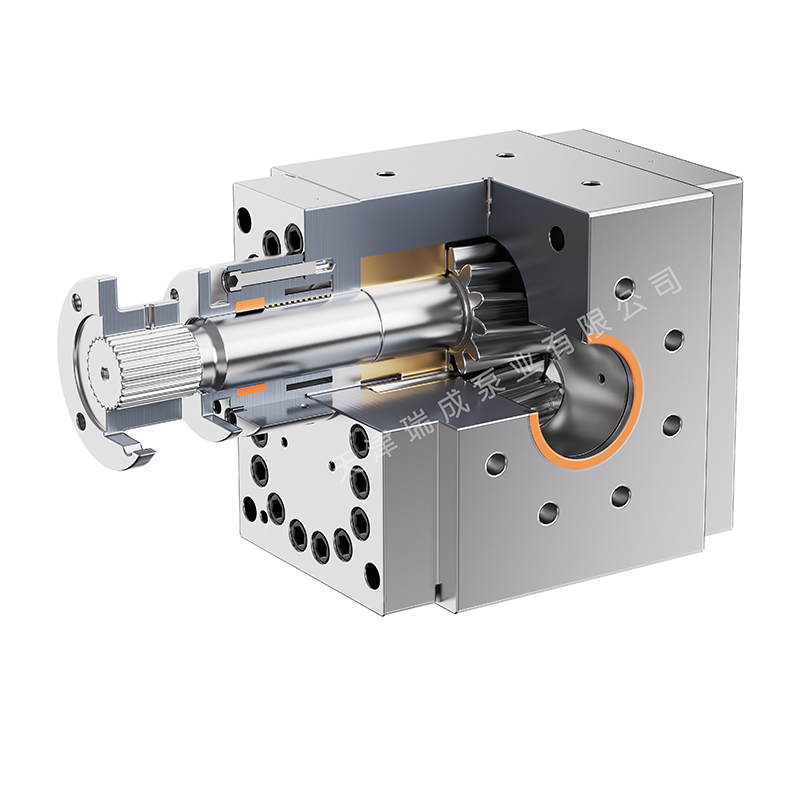
The pump housing is the primary load-bearing component of the melt pump. It contains the gear working chamber and adhesive flow channels, and also serves to connect the inlet and outlet piping, mount the end plates, and secure the shaft assembly.
The material of the pump housing must be selected based on the hot melt adhesive’s operating temperature, corrosiveness, viscosity, and working pressure. The internal flow channels typically need to remain smooth, with minimal unnecessary bends and dead zones, to reduce the likelihood of coking or solidification caused by prolonged material retention.
II. Drive Gear and Driven Gear
The gear set is the primary working component responsible for conveying the adhesive and consists of a drive gear and a driven gear. The drive gear rotates under the power of the drive system and, through meshing, drives the driven gear to operate in sync. As the gears rotate, the material is carried along the inner walls on both sides of the pump chamber toward the outlet; at the outlet, the gears re-mesh, and the adhesive is discharged into the downstream piping. The precision of the tooth profile, the hardness of the tooth surfaces, and the clearance between the gears and the pump chamber all affect the actual discharge volume, internal backflow, and operating conditions.
III. Drive Shaft and Driven Shaft
The drive shaft connects to a coupling or reducer to transmit the torque output from the motor to the drive gear. The driven shaft primarily supports the driven gear, ensuring that the gear set maintains a relatively stable meshing state.
The shaft’s diameter, material, and structure must be matched to the pump’s displacement, rotational speed, operating pressure differential, and material viscosity. During installation, care must be taken to align the drive shaft with the pump shaft to prevent local wear, vibration, or increased operating resistance caused by misalignment.
IV. Shaft Sleeves
These are used to support the gear shafts, limit radial displacement, and maintain the working clearance between the gears and the pump chamber. In some designs, the hot melt adhesive being conveyed can provide a certain degree of lubrication; therefore, the equipment must be preheated and filled with material before startup and should not be operated for extended periods without material.
If the hot melt adhesive contains fillers or particles, the material and design should be selected based on their abrasiveness.
V. End Plates and Sealing Assemblies
The front and rear end plates seal the pump chamber, position the shaft assembly, and, together with the pump body, form a complete conveying space. The clearance between the end plates and the gear end faces affects internal backflow; therefore, it must be set appropriately based on operating temperature and material characteristics.
Sealing assemblies are primarily used to minimize leakage of the hot melt adhesive outward along the drive shaft; common types include packing seals, spiral seals, and combination seals. The specific design should be determined based on the adhesive’s viscosity, operating temperature, inlet pressure, and maintenance conditions.
VI. Heating and Insulation Structure
To prevent the hot melt adhesive from cooling and solidifying inside the pump, the pump body is typically equipped with electric heating ports or thermal oil heating channels. Before startup, the pump body should be preheated evenly to gradually soften any residual adhesive inside, followed by operation at low speed. The heating temperature should be set with reference to the adhesive’s softening point and production process to minimize the impact of localized overheating on the material’s state.
VII. Drive and Control System
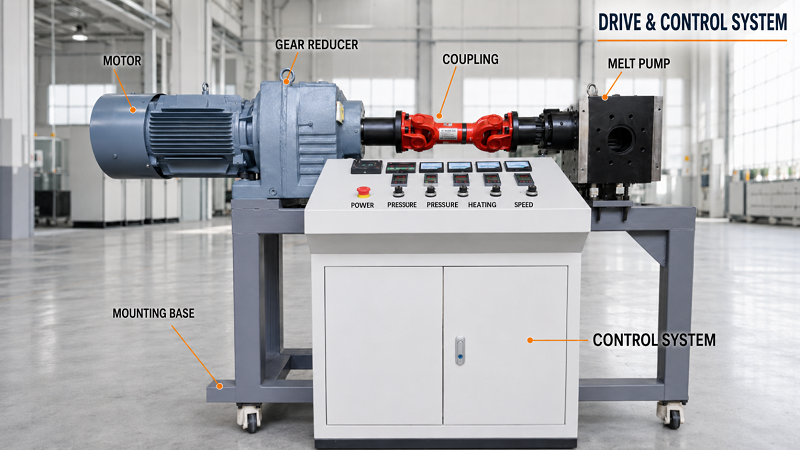
The drive system typically consists of a motor, a gear reducer, a coupling, and a mounting base. By adjusting the pump’s rotational speed, the adhesive output can be varied within a certain range. The production line can also be equipped with temperature, pressure, and speed monitoring devices to facilitate monitoring of equipment operation.
Selecting a melt pump specifically designed for hot melt adhesives requires comprehensive consideration of the adhesive’s composition, viscosity, operating temperature, target flow rate, inlet and outlet pressures, and continuous operating time. Based on specific material parameters and production processes, Tianjin Ruicheng Pump Industry can provide appropriate pump configuration recommendations for applications such as hot melt adhesive transfer, coating, lamination, and dispensing.