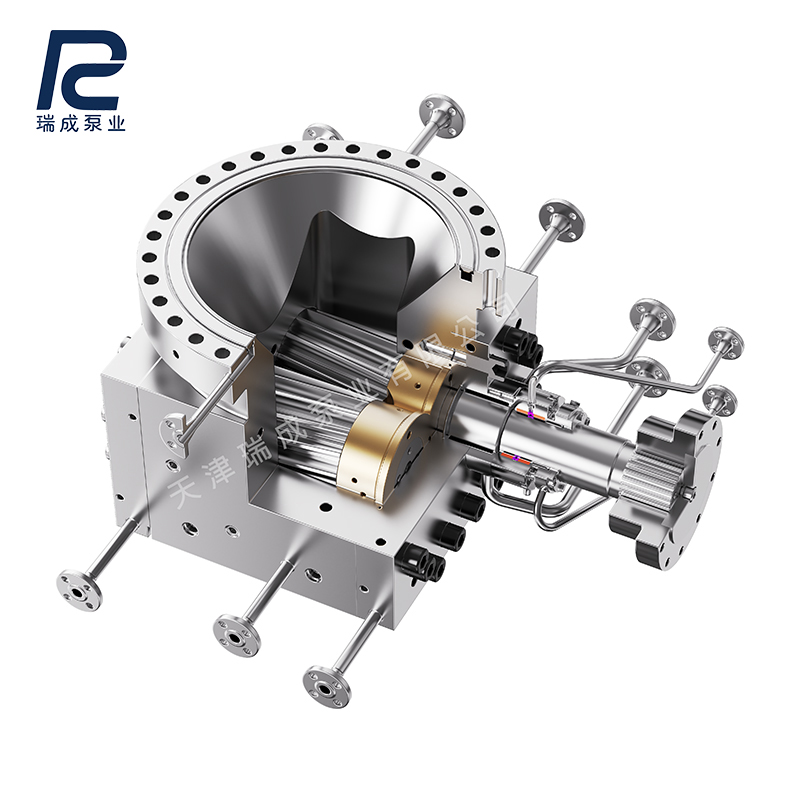
Structural Characteristics and Application Analysis of Bottom Pumps for Hot-Melt Adhesive Reactors
In the hot-melt adhesive production process, after the material undergoes heating, melting, mixing, and reaction, it must be discharged from the bottom of the reactor and conveyed to subsequent stages such as filtration, pelletizing, coating, or storage. Since hot melt adhesives typically exhibit high viscosity and high temperature during processing and tend to solidify easily upon cooling, relying solely on gravity for discharge makes the process susceptible to fluctuations in the reactor’s liquid level, material viscosity, pipeline resistance, and downstream pressure. Hot melt adhesive reactor bottom pumps are typically installed at the bottom of the reactor and are primarily responsible for continuous discharge, pressurization, and flow rate regulation.
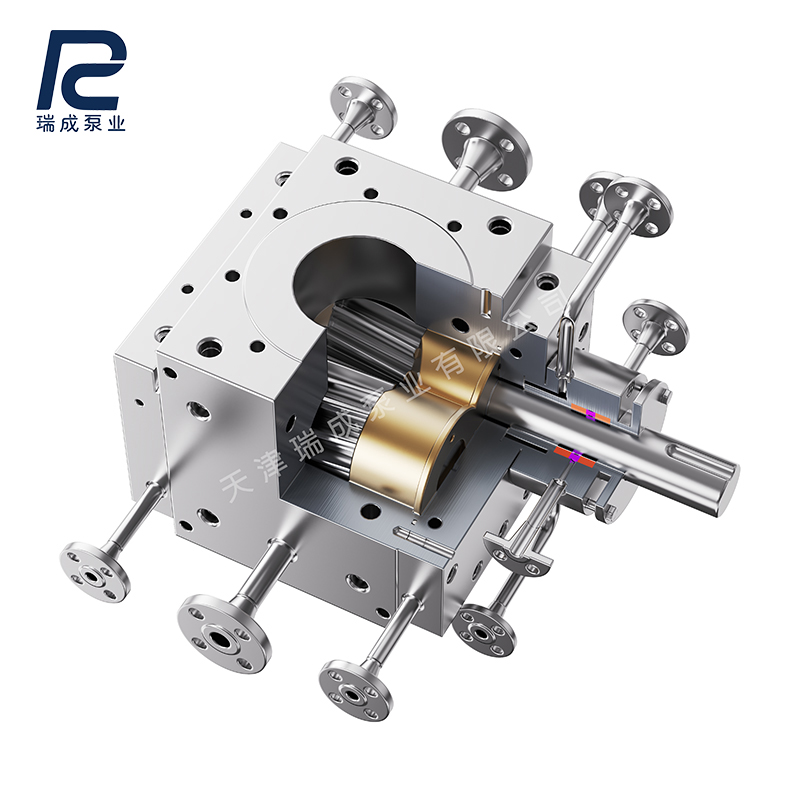
I. Basic Structure and Working Principle
A hot-melt adhesive reactor bottom pump primarily consists of a pump body, drive gear, driven gear, shaft assembly, shaft sleeve, sealing assembly, heating system, and connecting flanges.
During operation, the two gears mesh with each other inside the pump chamber. Once the material enters the gear pockets, it is transported along the inner wall of the pump chamber from the inlet side to the outlet side as the gears rotate, thereby forming a relatively continuous discharge process. By adjusting the rotational speed of the gears, the flow rate can be regulated within a certain range, providing a relatively stable supply of material for subsequent processes.
Since hot melt adhesives tend to thicken or solidify as temperatures drop, the pump body is typically equipped with a heating system to maintain the temperature of the pump chamber and internal flow passages. The inlet configuration can be designed based on the reactor’s bottom connection, material flow characteristics, and vacuum conditions. For shaft end seals, the choice between packing seals, spiral seals, or combination seals depends on operating temperature, material viscosity, inlet and outlet pressures, and the properties of the medium.
II. Suitable for Continuous Conveyance of High-Viscosity Materials
During reactor discharge, material viscosity may vary depending on the formulation, temperature, and reaction stage. Gear pumps convey material using a fixed-displacement chamber; under relatively stable rotational speeds, the discharge rate maintains a consistent relationship with the speed, which helps minimize flow fluctuations caused by changes in the reactor’s liquid level.
At the same time, a bottom-of-reactor pump can provide the necessary pressure for downstream filters, transfer lines, screen changers, die heads, or coating systems, addressing the issue of insufficient conveying power that arises when discharge relies solely on gravity. This ensures a smooth transition between the reaction, discharge, and subsequent processing stages.
III. Heating, Insulation, and Flow Path Design
Hot melt adhesives are relatively sensitive to temperature changes. If the pump body temperature is too low, it may cause the material’s viscosity to increase, the startup load to rise, or even result in localized flow restrictions. Therefore, the equipment typically requires thorough preheating before startup; the pump body, piping, and material must reach the appropriate process temperature before operation begins at low speed.
Proper design of internal flow paths, gear parameters, and clearance helps reduce prolonged material retention within the pump chamber, thereby lowering the likelihood of localized overheating, coking, or residual material buildup. For materials prone to thermal degradation or curing, it is also necessary to develop appropriate cleaning and shutdown procedures in conjunction with the production cycle.
IV. Typical Application Scenarios
Hot melt reactor bottom pumps can be used for discharging EVA hot melt adhesives, pressure-sensitive adhesives, polyamide hot melt adhesives, PUR hot melt adhesives, and other high-viscosity resin materials from reactors.
In actual production lines, the equipment can be integrated with reactors, filtration units, screen changers, pelletizing systems, coating equipment, or storage tanks for continuous discharge, pipeline pressurization, flow rate regulation, and process integration. For operating conditions involving a certain degree of vacuum at the inlet, high outlet resistance, materials prone to solidification, or the need for continuous production, the pump model should be selected based on specific parameters.
V. Parameters to Consider During Selection
When selecting a bottom-mounted pump for a hot-melt adhesive reactor, comprehensive consideration should be given to the material name, operating temperature, viscosity range, design throughput, inlet pressure, outlet pressure, filtration precision, pipeline length, installation method, and continuous operating time.
A higher pump displacement is not necessarily better. Excessive displacement may cause the equipment to operate at low speeds for extended periods, increasing the residence time of the material within the pump chamber; conversely, insufficient displacement may fail to meet the production line’s throughput and pressure requirements. Therefore, it is necessary to properly balance displacement, rotational speed, drive power, seal design, and heating method.
Tianjin Ruicheng Pump Industry can design the displacement, material, seals, heating method, and drive configuration of the bottom-mounted pump based on the hot-melt adhesive reactor’s connection dimensions, material properties, and process parameters. We can also provide matching motors, gear reducers, and control systems to serve as a reference for selecting equipment for hot-melt adhesive production lines.