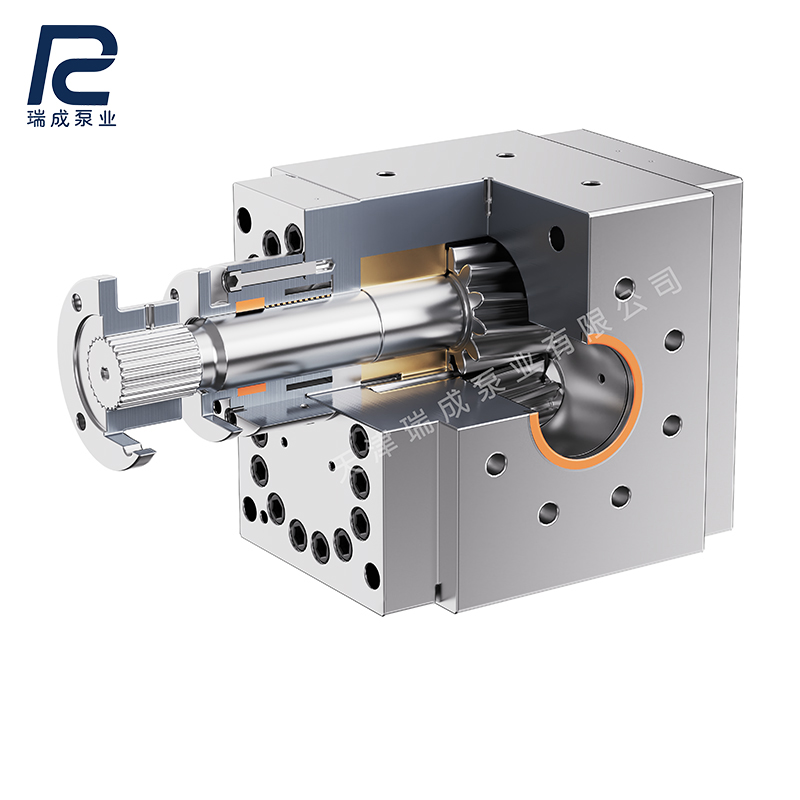
In production processes such as plastic extrusion, modified pelletization, chemical fiber spinning, and the conveyance of high-viscosity polymers, melt pumps are typically installed between the extruder and the die to regulate conveying pressure, enhance downstream feed capacity, and maintain a relatively stable flow rate. During operation, the high-temperature material inside the pump chamber not only conveys the material but also provides lubrication, filling, and heat dissipation for components such as gears, bushings, and gear shafts. Therefore, melt pumps should not be operated for extended periods when the pump chamber is empty or when material supply is insufficient.
Melt pumps are positive-displacement gear pumps. During operation, the gears rotate continuously, drawing molten material from the inlet into the gear teeth and conveying it along the inner wall of the pump body to the outlet. Under normal conditions, the melt enters the clearance between the gear shaft and the shaft sleeve, as well as between the gear end faces and the side plates, forming a lubricating film that reduces direct contact between components.
If the equipment runs dry, lacking material lubrication inside, the gears, shaft sleeves, and gear shafts are prone to transitioning from a normally lubricated state to dry friction or insufficient lubrication. The heat generated by friction cannot be promptly dissipated by the material, and local temperatures may rise, thereby affecting the fit between the pump’s internal components.
First, dry running tends to accelerate wear on the shaft sleeves and gear shafts. The internal assembly clearances in melt pumps are very small; once material lubrication is lacking, the mating surfaces may suffer scratches, wear, or changes in clearance. As the clearance increases, backflow within the pump may rise, which in turn affects discharge pressure, delivery volume, and flow stability.
Second, the gear end faces, side plates, and inner walls of the pump housing may also be affected. During dry running, if the pump housing heats unevenly, residual material is not fully melted, or internal components undergo thermal expansion, the resistance to gear rotation may increase. In severe cases, this can lead to scraping, abnormal noises, or even jamming.
Idling can also affect the operating condition of the sealing areas. Some sealing mechanisms rely on the conveyed medium to improve lubrication and heat dissipation. Prolonged operation without material may lead to increased friction and elevated temperatures at the sealing areas, accelerating seal wear and resulting in subsequent material leakage or reduced sealing performance.
Furthermore, if a small amount of material remains in the pump chamber, it may degrade, discolor, or carbonize under the effects of localized high temperatures and friction. The resulting char, carbonized particles, or fine abrasive debris can enter downstream filters, die heads, and molding systems, potentially affecting product surface quality and material purity.
In actual production, dry running does not necessarily mean there is absolutely no material inside the pump. Unstable extruder feeding, excessively low inlet pressure, high material viscosity, clogged filters, insufficient material in the hopper, or excessive pump speed can all lead to insufficient filling of the gear pockets, resulting in a material-deficient operating state similar to dry running.
To minimize such issues, the pump body, piping, and die should be thoroughly preheated before startup to ensure that any residual material inside has softened or melted. Once upstream equipment is supplying material steadily and the melt has entered the pump chamber, start the melt pump at a lower speed and gradually adjust it to the speed required by the process.
During operation, closely monitor the inlet and outlet pressures, motor current, drive torque, and the equipment’s noise and vibration levels. If pressure fails to build up, current rises abnormally, output fluctuates, or unusual noises occur, reduce the speed promptly or shut down the machine for inspection; do not continue operation under conditions of insufficient material supply.
Melt pumps must not run dry, primarily because their internal components rely on the material for lubrication, filling, and heat dissipation. Properly controlling preheating time, startup sequence, inlet pressure, and operating speed helps reduce wear on pump components, maintain equipment performance, and ensure the continuity of the production process.