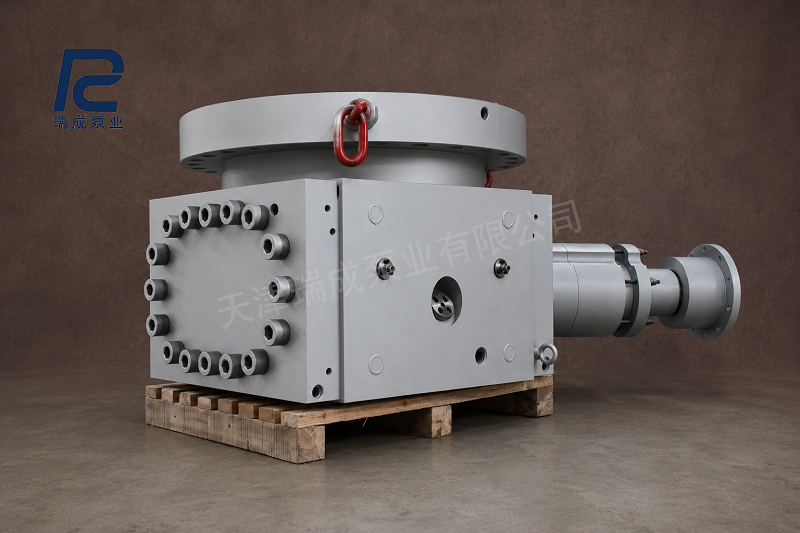
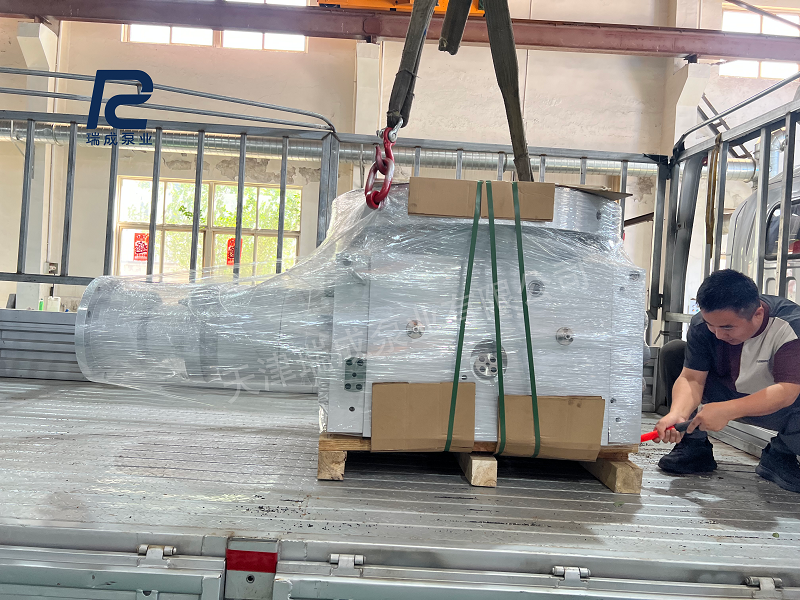
Recently, Tianjin Ruicheng Pump Industry Co., Ltd. completed the assembly and factory inspection of a 21,500 cc high-capacity bottom-of-reactor pump and officially shipped it to the customer’s site. The equipment will be used for the transportation of chemical polymers, primarily handling the continuous discharge, stable conveyance, and pressurized transfer of high-viscosity materials from the bottom of the reactor.
In the production of chemical polymers, materials typically exhibit high temperatures, high viscosity, poor flowability, and high discharge resistance. Particularly during discharge from the bottom of a reactor, relying solely on gravity flow or standard conveying equipment can easily lead to issues such as intermittent discharge, pressure fluctuations in the piping, material stagnation, and difficult cleaning. These problems can subsequently affect the stable operation of downstream processes such as conveying, filtration, pelletizing, or packaging. Therefore, the proper configuration of a bottom-of-reactor pump is of great significance for high-viscosity polymer conveying applications.
Typically installed at the bottom of the reactor and directly connected to the reactor outlet, the primary function of a bottom-of-reactor pump is not merely to “extract material,” but to provide forced conveying and establish pressure during the discharge process. By creating stable volumetric changes through gear meshing, bottom-mounted pumps can continuously feed high-viscosity polymers into downstream pipelines, thereby addressing issues such as unstable discharge, high pipeline resistance, and material accumulation. For continuous production lines, the pump’s discharge capacity, structural strength, sealing design, wear resistance, and heating/insulation features all directly impact on-site operational performance.
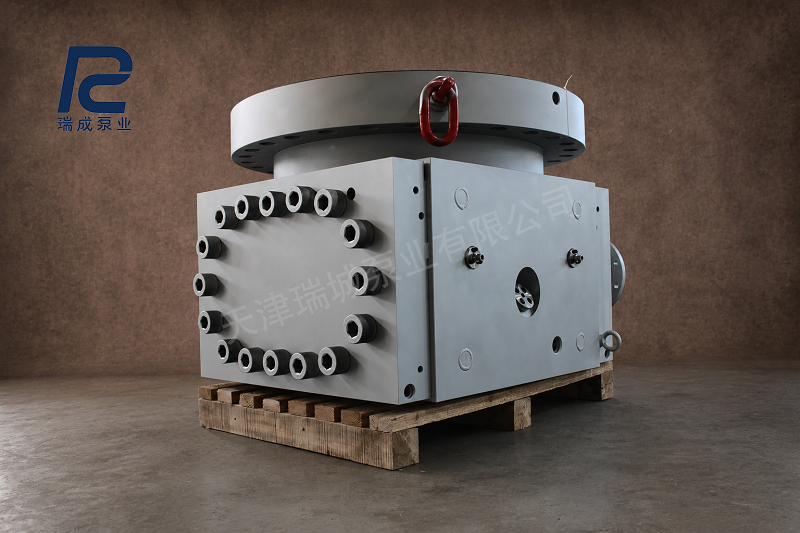
The 21500CC bottom-of-reactor pump shipped in this order is a high-capacity custom-made unit. During the design and manufacturing process, Tianjin Ruicheng Pump Industry comprehensively optimized the pump body structure, gear meshing, sealing system, and connection methods by taking into account factors such as the characteristics of the materials at the customer’s site, reactor connections, installation space, discharge pressure, and downstream piping layout. The overall design of the equipment prioritizes the ability to handle high-viscosity materials and operational stability, making it suitable for the high-flow, continuous, and stable discharge requirements of chemical polymer production.
In the chemical industry, selecting a bottom-mounted pump requires more than just considering flow rate; it necessitates a comprehensive evaluation that includes material viscosity, operating temperature, discharge pressure, corrosiveness, abrasiveness, and installation conditions. If the pump model is improperly matched, it may result in insufficient discharge, unstable pressure, increased equipment load, or higher maintenance costs in the long term. Tianjin Ruicheng Pump Industry consistently bases its solutions on actual operating conditions to provide customers with pump configuration plans that better meet on-site requirements.
The successful shipment of this 21,500 cc chemical polymer transfer bottom-of-vessel pump demonstrates Tianjin Ruicheng Pump Industry’s manufacturing capabilities and customized service expertise in high-displacement, high-viscosity material transfer equipment. Moving forward, the company will continue to focus on products such as melt pumps, bottom-of-reactor pumps, pipeline booster pumps, and rubber pumps to provide stable and reliable conveying solutions for manufacturers in the chemical, plastics, rubber, hot melt adhesive, and polymer materials industries, helping customers improve continuous production efficiency and equipment operational stability.