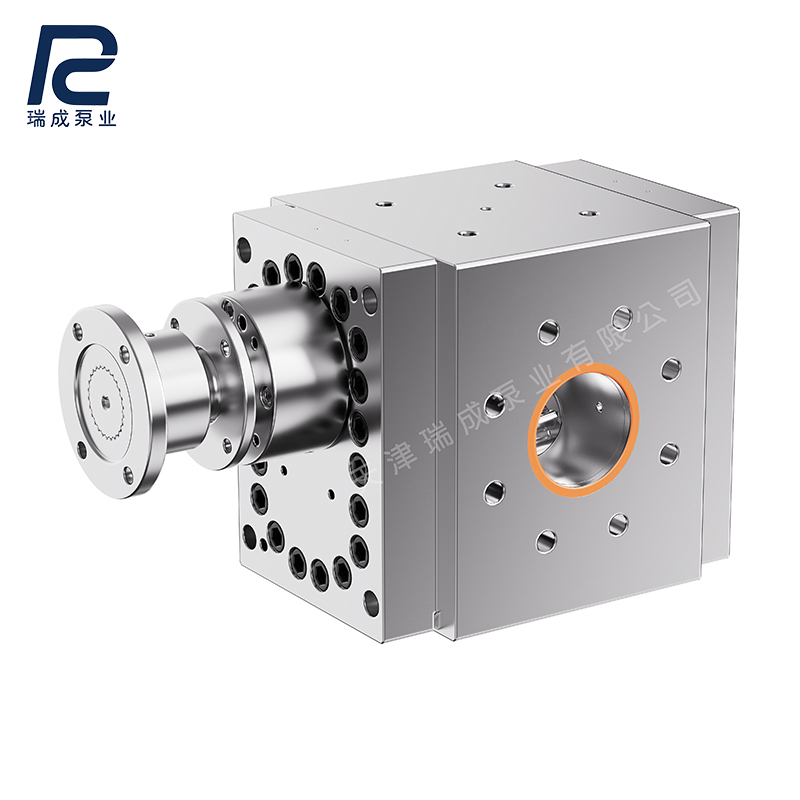
What does a melt pump do in plastic pelletizing? In compounding, plastics recycling and other pelletizing processes, a melt pump primarily builds pressure and meters the melt, helping reduce upstream output fluctuations and deliver a more uniform flow to the pelletizing die.Variations in strand thickness and pellet size are not always caused by the pelletizer alone. Changes in screw feeding, material viscosity, processing temperature and filtration resistance can all affect die feeding. If the melt flow keeps fluctuating, adjusting the cutter speed alone may not be enough to maintain consistent pellet dimensions.
A melt pump for plastic pelletizing uses rotating gears to continuously convey melt toward the outlet through the spaces between the gear teeth and the pump housing. With sufficient inlet filling and a suitable temperature, speed adjustment helps regulate the delivery rate. The melt pump also takes over part of the pressure-building task from the extruder, allowing screw plasticizing and mixing to work in coordination with downstream pressurization and conveying.
Different pelletizing formulations place different demands on the pump. When processing glass-fiber-reinforced, mineral-filled or potentially corrosive materials, the materials used for the gears, bushings and pump housing must be selected with wear and corrosion in mind. Pump displacement and drive power should be determined according to actual operating conditions, including throughput, melt viscosity and differential pressure, rather than connection dimensions alone.
When operating a melt pump for plastic pelletizing, proper preheating, pressure monitoring and interlock controls are also necessary. Increasing pump speed cannot compensate for insufficient inlet feeding. Pellet quality also depends on the die, cutter and cooling conditions, requiring coordination across the production line.
Tianjin Ruicheng Pump Industry Co., Ltd. provides melt pump selection and supporting solutions based on material properties and production requirements, helping users improve melt feeding conditions in pelletizing processes.