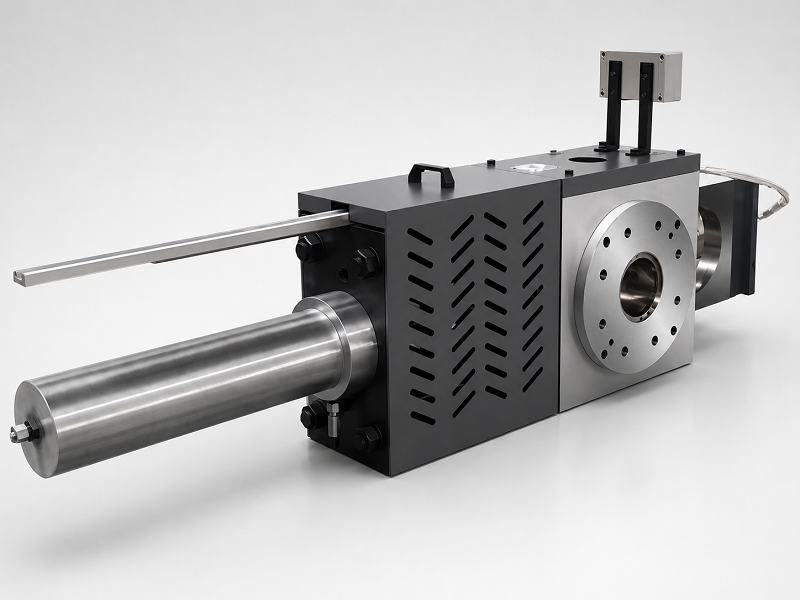
Plastic sheets are typically manufactured from raw materials such as PP, PE, PET, PS, ABS, PC, and other polymers, through processes including blending, plasticization, extrusion, filtration, die forming, calendering, or cooling and shaping. During production, the cleanliness of the melt, its flow characteristics, and pressure fluctuations all affect the thickness uniformity, surface finish, and subsequent processing results of the sheets. Screen changers are generally installed between the extruder and the die head. They primarily handle melt filtration and screen changing, and are commonly used auxiliary equipment in sheet extrusion lines.
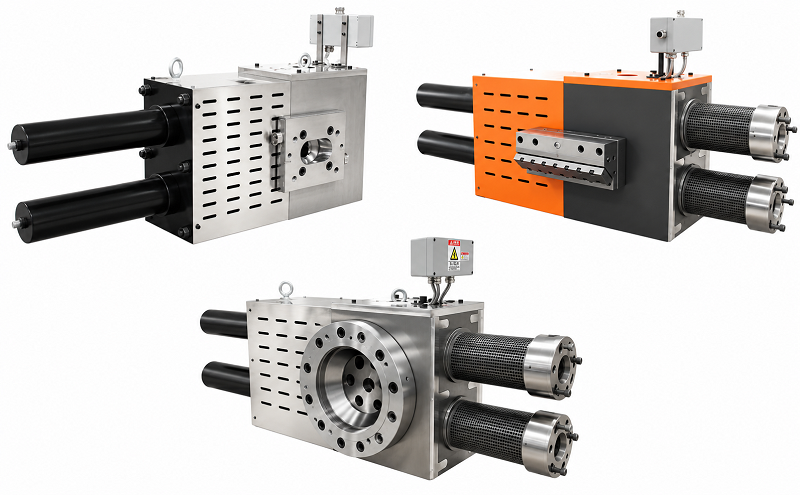
I. Filtering Impurities from the Melt
During storage, transportation, mixing, and feeding, sheet raw materials may become contaminated with dust, packaging debris, metal particles, and other foreign matter. When using recycled or blended materials, the raw material may also contain unmelted particles, carbides, agglomerated fillers, and different types of polymers.
If these impurities enter the die with the melt, they may clog the die channels and cause black spots, crystalline spots, scratches, uneven surfaces, or localized material deficiencies on the sheet surface. A screen changer uses internally mounted filters to intercept larger particles, ensuring that the melt entering the die remains relatively clean.
II. Improving Sheet Surface Quality
The surface quality of the sheet is closely related to the cleanliness of the raw material, the degree of plasticization, and the filtration process. When the melt contains impurities or insufficiently plasticized particles, the molded sheet may exhibit issues such as a grainy texture, color spots, streaks, and uneven gloss.
Depending on the raw material characteristics and product requirements, screen changers can be configured with screens of different mesh counts, materials, and layers. Coarse screens primarily provide support and perform preliminary filtration, while fine screens are used to trap smaller impurities. A reasonable combination of screens helps balance filtration efficiency with melt flow capacity.
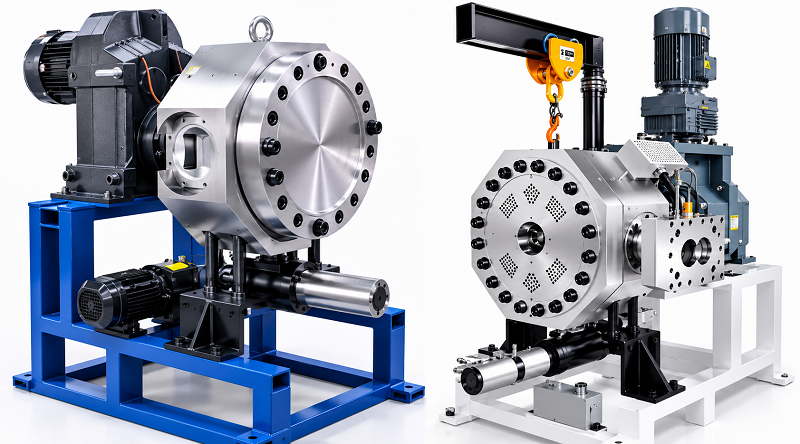
III. Auxiliary Control of Melt Pressure Fluctuations
As production time increases, the amount of impurities trapped on the screens gradually accumulates, and the resistance encountered by the melt as it passes through the screens also increases. If screen clogging is significant, the pressure upstream of the screen changer may rise, and the melt flow rate entering the die may also change.
Unstable melt flow can easily lead to fluctuations in sheet thickness, uneven lateral distribution, irregular edges, or changes in the traction state. By monitoring pressure data upstream and downstream of the screen changer, operators can assess the condition of the filter screen and schedule appropriate screen changes.
It should be noted that the screen changer is primarily responsible for filtration and screen changes; it cannot single-handedly resolve all pressure fluctuation issues. The production line also requires comprehensive adjustments based on the extruder’s status, raw material plastification, temperature control, and melt pump operating parameters.
IV. Maintaining Production Continuity
Traditional screen changes typically require stopping the extrusion equipment and replacing the screen after the system has depressurized. This method is time-consuming, and prolonged retention of material inside the machine may lead to overheating, discoloration, or decomposition.
Dual-column, dual-plate, and continuous screen changers allow for switching between filtration stations while the equipment is running, reducing production downtime caused by screen changes. During the switchover, the original filtration channel is gradually closed while the standby filtration channel is activated, allowing the melt to continue flowing toward the die.
V. Protecting the Die and Downstream Equipment
Hard particles, metal debris, and carbon deposits in the melt can cause wear on the die’s flow channel surfaces or clog small exit gaps once they enter the die. By intercepting these impurities in advance, screen changers can minimize the impact of foreign matter on the die head and roller forming stages, and reduce the frequency of shutdowns for cleaning.
VI. Key Considerations for Selecting Screen Changers
When selecting a screen changer for a sheet production line, factors such as raw material type, output, melt viscosity, operating temperature, system pressure, impurity content, and screen change frequency should be taken into account. Attention should also be paid to the filtration area, flow channel structure, heating method, sealing type, and operating space.
Overall, screen changers perform tasks such as impurity filtration, screen switching, die protection, and production coordination in plastic sheet production. Properly configuring the screens and promptly monitoring pressure changes help improve melt cleanliness and minimize the impact of impurities on sheet appearance and equipment operation.