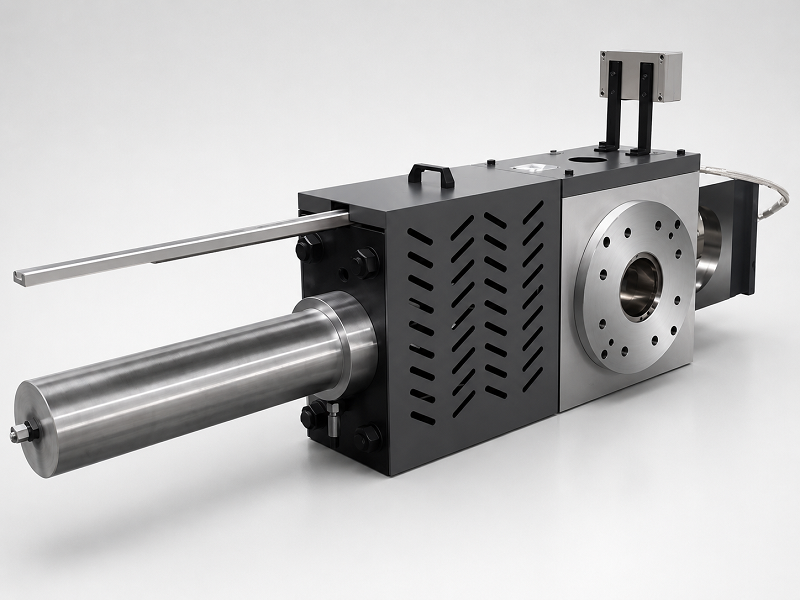
In plastic extrusion, modified pelletization, recycled material processing, and polymer material production, melt filtration systems play a critical role in removing impurities and ensuring material purity. As production lines demand ever-higher standards for continuous operation, stable production, and ease of equipment maintenance, the structural design of screen changers is constantly being optimized.
As a key auxiliary device in extrusion equipment, the single-plate, dual-station screen changer features a dual-filtration-station design that not only meets melt filtration requirements but also provides greater operational flexibility for production lines, making it suitable for a wide range of plastic extrusion applications.
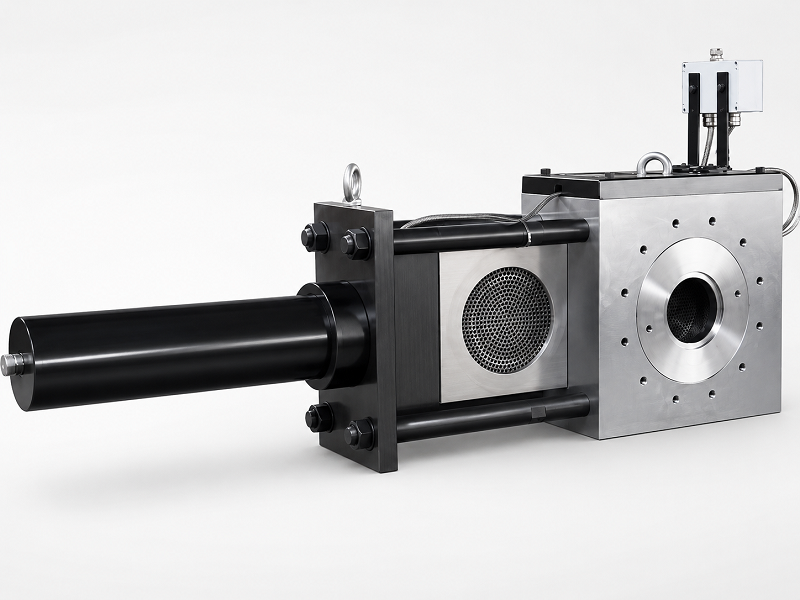
I. Working Principle of the Single-Plate, Dual-Station Screen Changer
The single-plate, dual-station screen changer primarily consists of a filter plate, screen-changing mechanism, sealing structure, and drive system. The equipment features two independent filtration stations; by moving the filter plate or switching filtration zones, it facilitates the transition between operational and maintenance modes.
During normal production, one filtration zone remains active, with the melt passing through the filter screen into downstream equipment. When pressure rises due to accumulated impurities after the filter screen has been in use for a period, operators can use the screen-changing mechanism to switch filtration zones and replace or clean the filter screen.
This design minimizes the impact of downtime caused by screen replacement, enabling the production line to maintain a high level of continuous operation.
II. Compact Structure, Compatible with Various Extrusion Equipment
Production line configurations vary among different plastic processing enterprises, with differences in installation space, output requirements, and material characteristics. The single-plate, dual-station screen changer features a relatively compact design, occupies minimal space, and is easily installed between the extruder, melt pump, and die head.
In practical applications, the interface configuration, filtration area, and connection methods can be adjusted according to the production line layout, making it suitable for: plastic sheet and plate extrusion production lines; pipe and profile extrusion production lines; pelletizing production lines for materials such as PP and PE; modified plastic processing production lines; and recycled plastic processing production lines.
By appropriately matching filtration precision with flow channel design, it can meet the filtration requirements of various material processing operations.
III. Minimizing the Impact of Screen Changes and Improving Production Stability
During the processing of high-viscosity polymers, the stability of the filtration system affects the operational status of the entire production line. If significant pressure fluctuations occur during filter screen changes, this may cause fluctuations in extrusion pressure, thereby affecting product quality.
The single-plate, dual-station screen changer optimizes the flow channel structure to maintain good melt flow during the filtration process. When a screen change is required, the filtration area is adjusted via dual-station switching, which helps minimize pressure fluctuations during production.
For customers with high demands for continuous production, a stable filtration process helps the production line maintain smoother operation.
IV. Easy Maintenance and Reduced Equipment Management Complexity
During the extrusion process, filter screens require maintenance based on material cleanliness, production duration, and processing conditions. Traditional filtration methods require significant manual intervention during screen changes, whereas the single-plate dual-station screen changer, through structural optimization, makes filter screen maintenance more convenient.
During equipment maintenance, operators can inspect, replace, and clean the filter screens based on actual conditions. Additionally, the standardized structural design facilitates future repairs, enhancing the equipment’s ease of use.
V. Tailored Solutions for Different Materials
Different polymer materials exhibit distinct flow characteristics. For example, recycled plastics may contain a higher amount of impurities, requiring greater filtration capacity; certain modified materials demand higher pressure stability, necessitating a properly designed filtration area.
Tianjin Ruicheng Pump Industry can conduct a comprehensive analysis based on the customer’s actual operating conditions—including material type, production output, operating temperature, pressure conditions, and installation space—to provide tailored screen changer solutions for extrusion production lines.
Furthermore, when combined with melt pump products, an integrated solution for melt conveyance, pressurization, and filtration can be formed, helping customers optimize their production processes.
VI. Application Value of Single-Plate Dual-Station Screen Changers
As the plastics processing industry continues to evolve toward higher efficiency and greater precision, production equipment must not only meet basic processing requirements but also balance operational convenience with operational stability.
With features such as flexible structure, easy installation, and broad compatibility, single-plate dual-station screen changers can be applied to a variety of extrusion processing scenarios, providing reliable support for the filtration stage of production lines.
In the future, as the use of new materials, recycled materials, and functional polymers continues to grow, screen changers—as a critical component of extrusion systems—will play an even more significant role in enhancing production efficiency and optimizing process flows.
Tianjin Ruicheng Pump Industry remains committed to addressing the needs of the polymer materials processing sector. Through equipment such as melt pumps and screen changers, the company provides customers with fluid transfer and filtration solutions tailored to their actual production conditions.